After hip replacement
A supported return to exercise that respects your surgeon’s precautions and physiotherapy plan. Your stage of recovery, not a fixed timetable, determines the starting point.

Specialist programmes · Rehab & Restore
Personalised exercise coaching in Malta, after injury or joint replacement.
When movement feels uncertain, knowing where to start can be the hardest part. We help you take an informed, supported next step—with one-to-one coaching built around your capabilities, limitations and recovery goals.
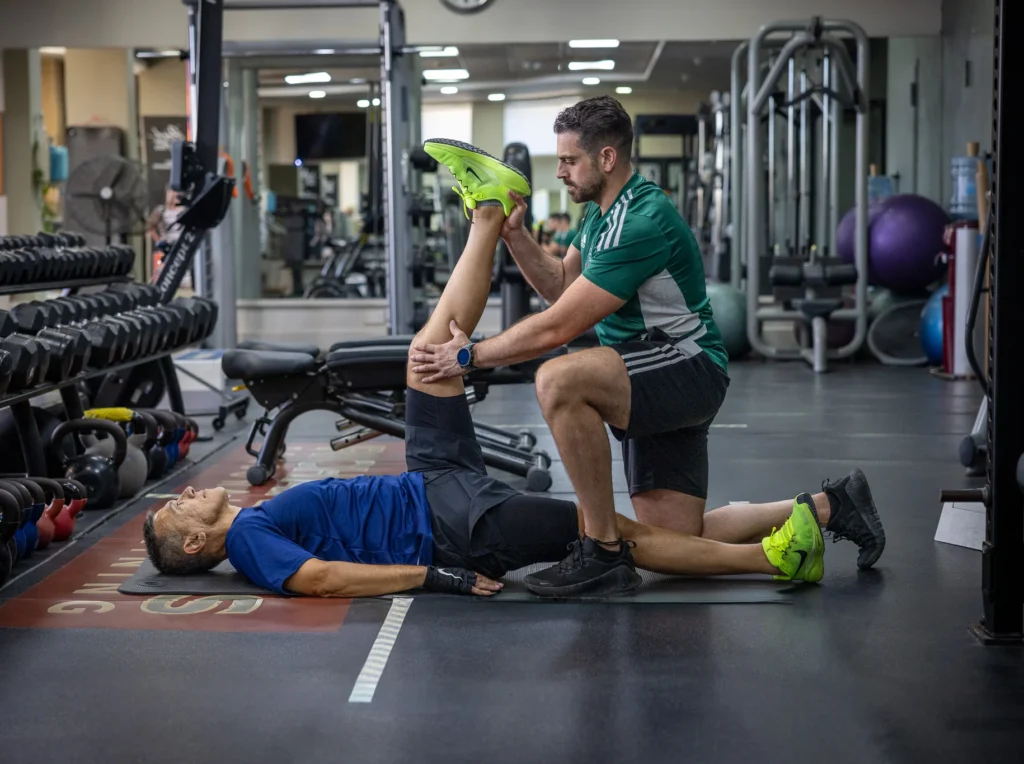
Find your way back to movement
After an injury or operation, it is natural to worry that exercise might cause more harm.
Appropriately selected activity can be part of recovery, helping you rebuild movement and strength. The important question is which exercise is suitable for you, at this stage, and with what support.
Rehab & Restore helps bridge the step between clinical advice and a consistent exercise routine. We begin by listening, assess what you can currently do and build a programme around your needs. Where medical assessment or physiotherapy is needed first, we will say so.
Where we can help
A supported return to exercise that respects your surgeon’s precautions and physiotherapy plan. Your stage of recovery, not a fixed timetable, determines the starting point.
Individual coaching focused on rebuilding strength, movement and confidence for everyday activities, in line with relevant clinical guidance.
Exercise choices adapted to your available movement and current restrictions, with attention to appropriate loading and the activities you want to return to.
A gradual approach to movement and strength, shaped by your symptoms, capabilities and any diagnosis or advice you have received. Unexplained or worsening symptoms need clinical assessment.
Work on strength, mobility and movement control for daily life. We consider how you move and what feels difficult, rather than assuming there is one perfect posture for everyone.
Our approach
Tell us about your injury or operation, your recovery so far and what you would like to do again. We review relevant medical advice and restrictions before deciding whether training is appropriate.
We assess relevant physical capabilities and limitations, such as movement, strength and balance, within your current restrictions. This is an exercise assessment, not a medical diagnosis.
Your programme addresses your priorities with suitable exercises, loading, range of movement and rest. Where appropriate, we adapt training to keep other areas active while protecting the affected area.
One-to-one guidance helps you practise with control and confidence. We record your assessments and workouts in our proprietary app and adjust the plan in response to your progress and clinical advice.
Joined-up support
Your exercise programme should complement your care—not compete with it.
When necessary, and with your consent, we liaise with your doctor or physiotherapist to clarify restrictions, understand the next stage of your recovery and keep your training aligned with their recommendations.
Our role is to coach appropriate exercise. We do not diagnose injuries, override post-operative precautions or replace clinical rehabilitation.
Within those boundaries, there may be useful ways to stay active, rebuild physical capability and regain confidence while you recover.
Client experiences
Two stories from the club, showing different stages of a return to movement. Each person’s recovery is different.
Client story 01 · Hip replacement
Two weeks after hip replacemetn surgery, Roberta was back in the gym, training uper body and performing rehab exercises for the hip area. Within 6 months she was back to performing her usual gym routine.
Her rehab programme started with exercise for her upper body, which was not impacted by her surgery. This allowed her to regain strength and muscle tone. At the same time we took her through the recommended rehab exercises prescribed by her physiotherapist and slowly progressed these until she was gradually able to resume the more traditional strength exercises for the lower body. She provided her trainer with constant feedback as to how she felt, and the workouts were adapted continuously to reflect this. Within 6 months she was able to perform her usual gym routine.
Two weeks is this client’s individual timeline, not a recommended return date or a sign of full recovery. Your surgeon or physiotherapist should guide when and how you return.
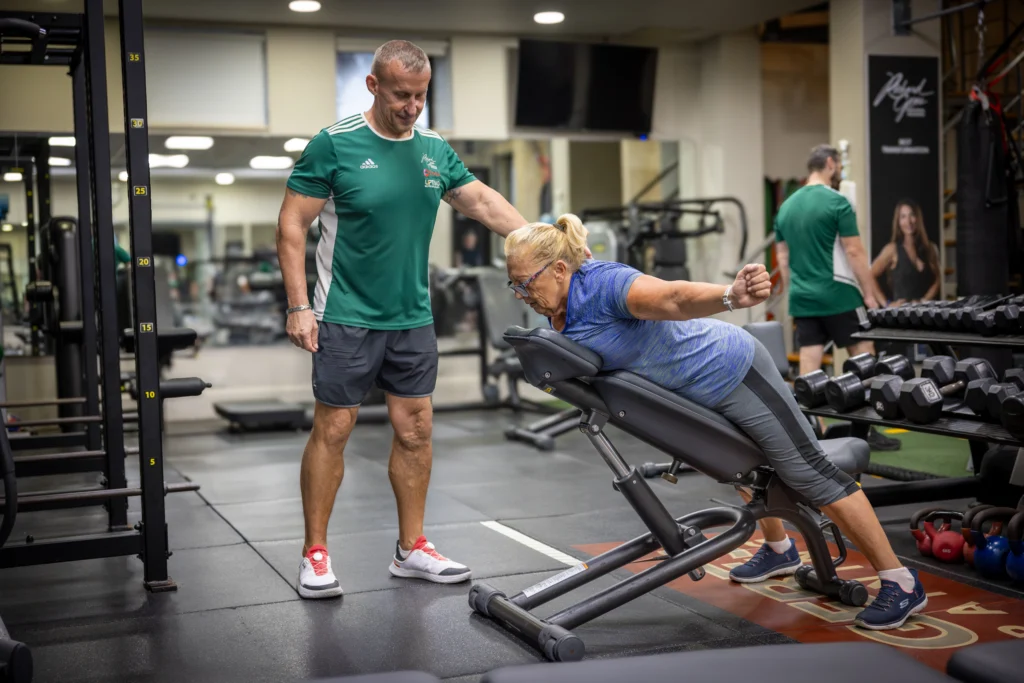
Client story 02 · Knee replacement
Marija got back in the gym 3 months after her knee repalcement surgery, and within 12 months regained full use of her legs.
Starting point · Exercise approach · Documented progress
This is an individual case, not a promise of the same outcome or a suggested waiting period before exercise.
Progress with purpose
We agree on goals that relate to your life and review them against your starting point. Progress may be gradual, and your programme can change as your needs change.
Before you begin
The right activity depends on the injury, its stage and your symptoms. Appropriate exercise can support recovery, but the wrong type or amount may aggravate a problem. We assess suitability, respect clinical restrictions and adapt or pause training when needed.
There is no single return date. Follow your surgical team’s and physiotherapist’s advice. Before gym-based training, we need to understand your precautions and whether you have been cleared for the activities being considered.
No. Rehab & Restore is personalised exercise coaching. It does not replace diagnosis, physiotherapy or medical treatment. We work with doctors and physiotherapists when necessary to support an appropriate return to training.
Not every recovery journey is pain-free, but pain is not something we ask you to ignore. We discuss your symptoms and any clinical guidance. New, sharp or worsening pain means stopping the activity and reviewing what is appropriate.
Bring any relevant discharge instructions, exercise precautions or advice from your doctor or physiotherapist, along with details of your goals and the activities you currently find difficult.
If you are acutely unwell, have a new injury or unexplained or worsening symptoms, seek medical advice before exercising. Back pain with new bladder or bowel changes, numbness around the groin, or weakness in both legs requires urgent emergency assessment, not a gym consultation.
Your next step
Tell us what has happened, what you are finding difficult and what you would like to get back to. We will discuss whether Rehab & Restore is appropriate for you and what information we need before you begin.
Book a free consultation